Humanitarian logistics, maritime disruption, and supply-chain resilience
Humanitarian logistics becomes especially critical when conflict disrupts the systems used to move food, medicine, fuel, shelter materials, and other essential supplies. The ongoing Iran–U.S. war has created a complex logistics environment across the Middle East, with consequences extending well beyond the immediate conflict zone.
The disruption of maritime routes, regional airspace, fuel markets, ports, and transportation corridors is creating additional challenges for humanitarian organizations. The effects are not limited to Iran and neighboring countries. Humanitarian supply chains operating across the Middle East, Africa, and other vulnerable regions can also face higher transportation costs, longer lead times, and reduced access to critical supplies.
As of October 2026, the Strait of Hormuz remains one of the most important logistics concerns. The International Maritime Organization has confirmed 93 incidents involving commercial shipping in the Strait of Hormuz and the wider Middle East as of October 6, while recent attacks on tankers have increased maritime security risks.
For humanitarian organizations, this raises an important question: How can essential supplies continue moving when the transportation infrastructure itself becomes part of the crisis?
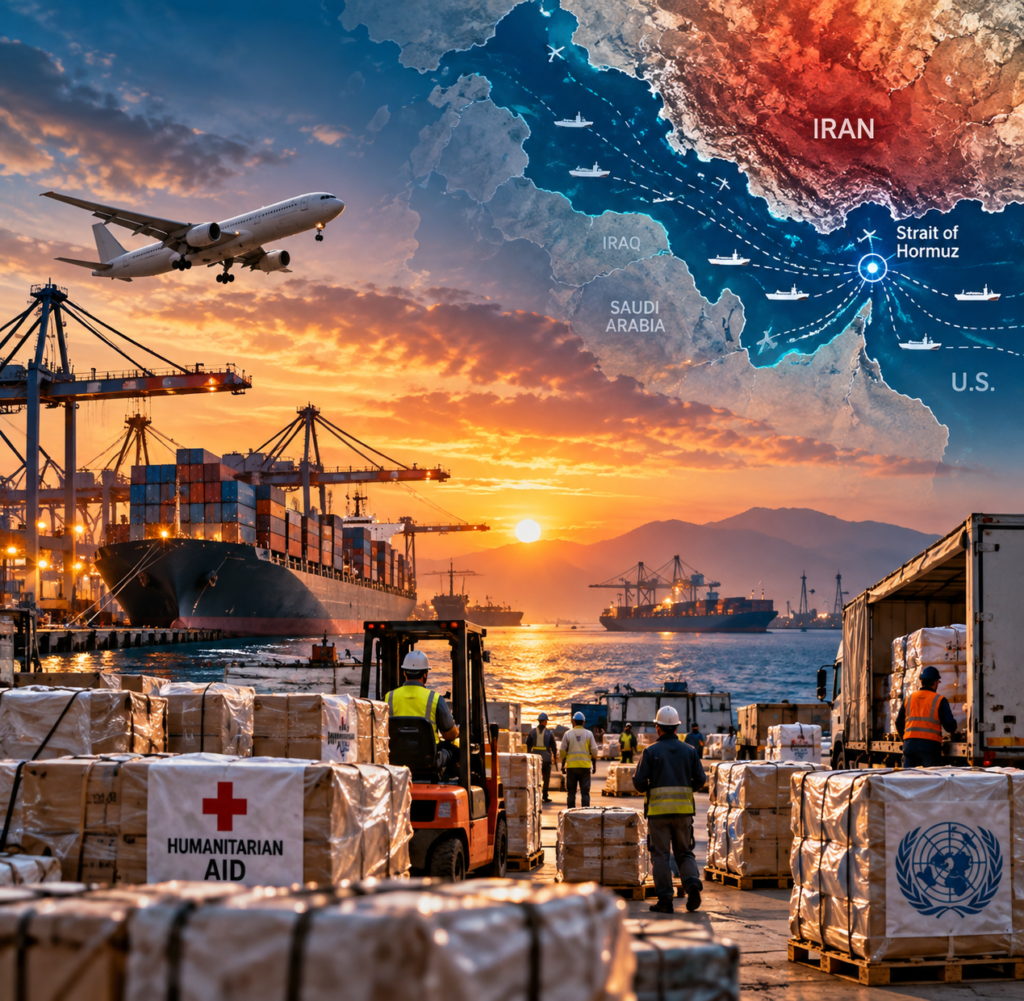
Figure 1. Humanitarian logistics under conflict: maritime routes, ports, transport infrastructure, and relief supply chains.
What Is Humanitarian Logistics?
Humanitarian logistics is the planning, coordination, transportation, storage, and distribution of goods and resources required to support people affected by disasters, conflict, displacement, and other emergencies.
Unlike commercial supply chains, humanitarian logistics often operates under extreme uncertainty.
The objective is not simply to minimize cost. The objective is to deliver the right supplies to the right place at the right time under difficult and rapidly changing conditions. That makes humanitarian logistics particularly vulnerable when transport corridors, ports, airports, fuel supplies, or border crossings are disrupted.
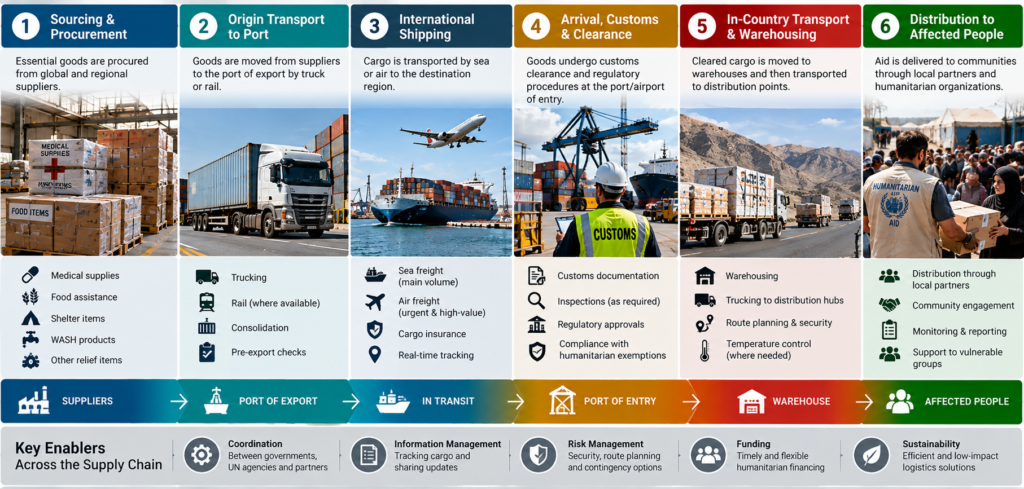
Figure 2. A typical humanitarian supply-chain flow from sourcing and procurement to final distribution to affected communities.
How the Iran–U.S. War Is Affecting Humanitarian Supply Chains
The conflict has created a combination of direct and indirect logistics disruptions. The UN humanitarian system has reported that the consequences of the regional crisis include disruptions to transportation corridors, airspace, ports, border crossings, and fuel supply chains. These disruptions have affected humanitarian operations across several countries and regions.
The International Rescue Committee also reported that the closure of the Strait of Hormuz and regional airspace restrictions were affecting humanitarian supply chains, including cargo flights, staff movements, nutrition supplies, medical supplies, and emergency assistance.
1. Longer transportation routes: When a normal shipping route becomes unsafe, humanitarian organizations may have to reroute cargo. Every additional logistics stage introduces another potential point of failure.
2. Higher transportation costs: Fuel prices, vessel availability, insurance premiums, security requirements, and longer routes can all increase logistics costs. 3. Longer lead times: Ports, airspace, border crossings, fuel availability, security conditions, and carrier decisions can all delay shipments.
The Strait of Hormuz: A Critical Logistics Chokepoint
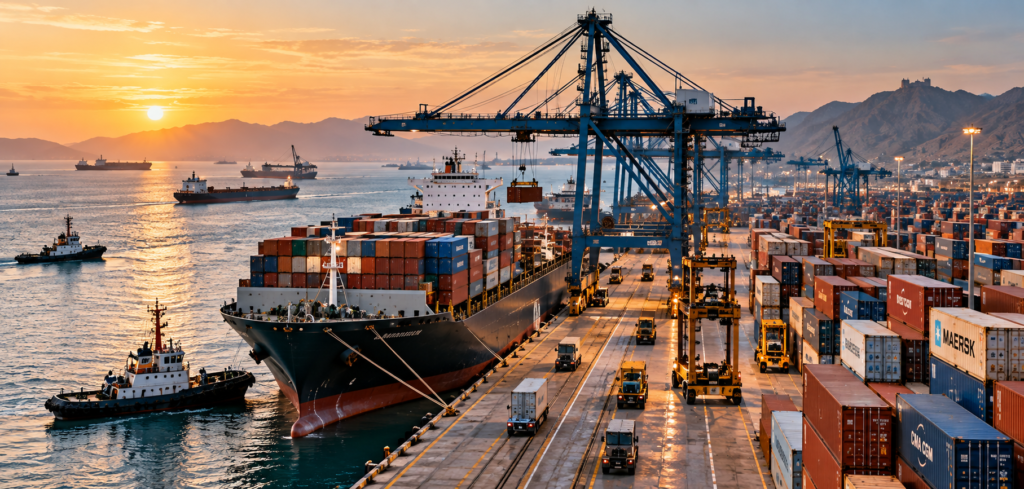
Figure 3. Container ports and maritime transport become strategically important when a major shipping corridor is disrupted.
The Strait of Hormuz is one of the world’s most strategically important maritime chokepoints. Its importance extends beyond energy markets. When maritime traffic through a major chokepoint becomes disrupted, the consequences can spread across energy, transportation, manufacturing, food, and humanitarian operations.
On October 7, Reuters reported that attacks and attempted attacks on tankers in the Strait of Hormuz during the previous week reached their highest level since the war began. Maritime security sources and the Joint Maritime Information Center identified at least 12 incidents involving oil, LNG, and LPG tankers between September 28 and October 5.
The IMO’s incident database listed 93 confirmed incidents as of October 6. This does not mean that all maritime trade has stopped. Oil continues to move through and around the region, but the cost, complexity, and risk of moving it have increased substantially.
Reuters reported that crude exports through Hormuz had recovered to approximately 14.2 million barrels per day, around 80% of pre-war levels, while freight and insurance costs remained elevated.
The problem is increasingly not simply whether the product is available, but whether the product can be transported safely, affordably, and reliably. That is a logistics problem.
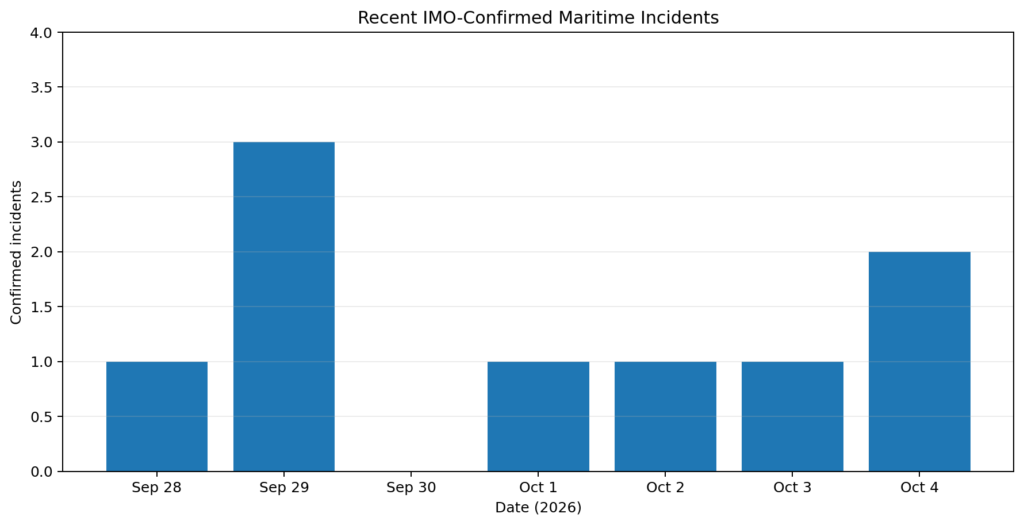
Figure 4. IMO-confirmed maritime incidents recorded on selected dates from September 28 to October 4, 2026.
The underlying IMO page reports 93 confirmed incidents as of October 6, 2026; the chart shows only the dated entries listed for this selected period.
Source: https://www.imo.org/en/mediacentre/hottopics/pages/middle-east-highlighted-incidents.aspx
Fuel Disruption Creates a Humanitarian Logistics Problem
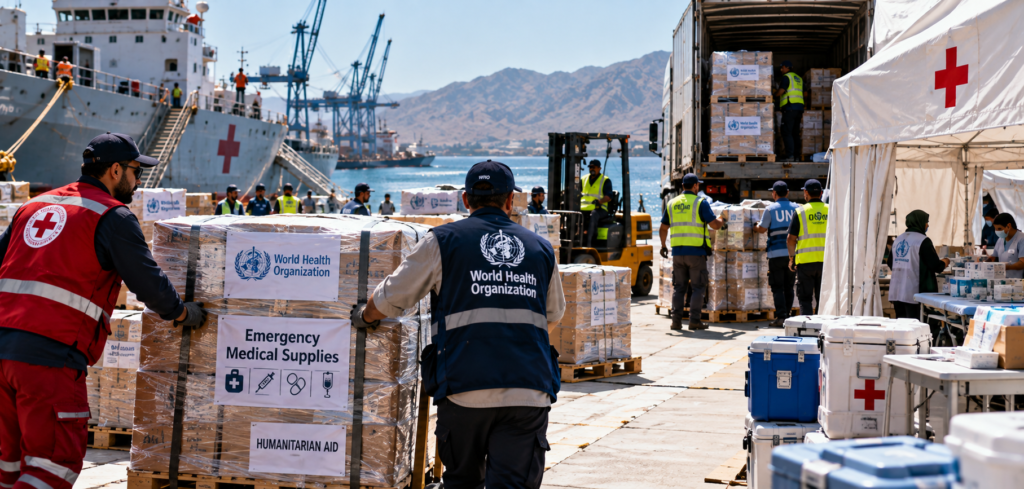
Figure 5. Documentary-style view of medical and humanitarian cargo handling, illustrating the physical operations behind emergency supply chains.
Fuel is one of the hidden foundations of humanitarian operations. Humanitarian organizations need fuel to operate trucks, ambulances, generators, refrigeration systems, warehouses, water pumps, communication systems, field offices, and emergency equipment.
If fuel becomes expensive or difficult to obtain, the effect can spread throughout the entire humanitarian supply chain. The International Rescue Committee warned that rising fuel and energy prices were increasing operational costs for humanitarian programs following the disruption of regional transport routes.
Food Supply Chains Are Also Vulnerable
Food is another major concern. Modern humanitarian food supply chains depend on international transportation networks. Food may be purchased from international suppliers, transported to a regional hub, stored in warehouses, moved through ports, transported across borders, delivered to local distribution centers, and finally distributed to affected communities.
A disruption at any stage can delay the entire process. Conflict-related energy and transportation disruptions can also affect fertilizer markets, agricultural production, food prices, and transportation costs.
Medical Supply Chains Face Even Greater Pressure
Medical logistics is particularly sensitive to delays. Some medical products require temperature-controlled transportation, refrigerated storage, specialized packaging, short delivery windows, reliable electricity, and strict inventory controls.
Vaccines and certain medicines may require cold-chain management throughout transportation. A disruption in electricity or fuel can therefore become a medical supply-chain problem. A shipment that arrives late may become unusable.
Airspace Closures Add Another Layer of Complexity
Humanitarian logistics does not depend entirely on ships. Air freight is often used when speed is more important than transportation cost. Medical supplies, emergency equipment, specialized personnel, and high-priority relief items may require air transportation.
Regional airspace restrictions can affect cargo flights, humanitarian staff movement, evacuation operations, medical transfers, and emergency response teams. This illustrates another important principle: humanitarian logistics requires multimodal transportation.
Ports and Humanitarian Warehouses Become Strategic Assets
Conflict can change the strategic importance of logistics hubs. Ports, airports, warehouses, free-trade zones, and regional humanitarian logistics centers can become critical infrastructure.
A warehouse close to a conflict zone may provide fast access under normal conditions but become highly vulnerable during escalation. A warehouse farther away may increase transportation time but provide greater security and continuity. This is a classic cost-versus-resilience decision.
From Just-in-Time to Just-in-Case
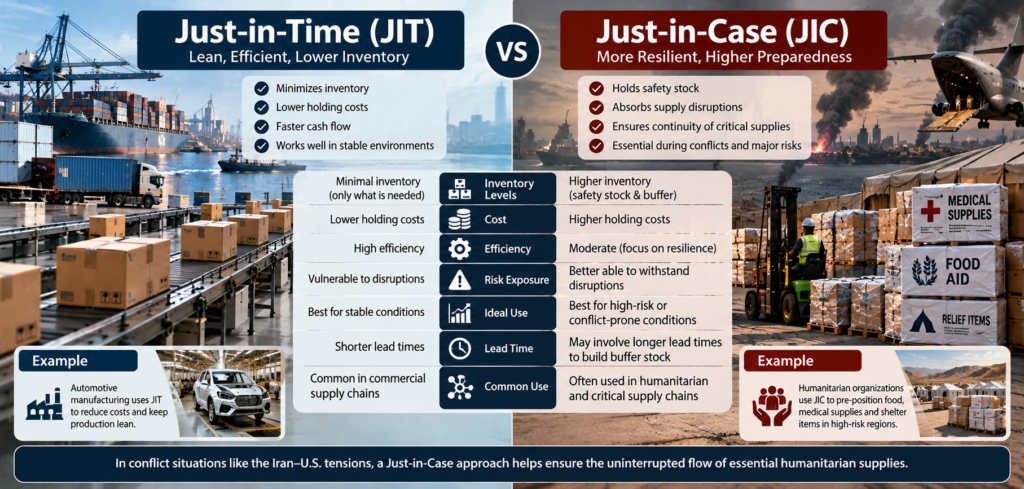
Figure 6. Just-in-Time (JIT) versus Just-in-Case (JIC): the trade-off between lean efficiency and disruption preparedness.
One of the clearest supply-chain lessons from the current conflict is the vulnerability of excessive dependence on just-in-time logistics.
For many years, companies optimized supply chains around low inventory, high asset utilization, minimal storage, fast replenishment, and concentrated supplier networks. War changes the equation.
Recent industry discussions have increasingly focused on moving from “just-in-time” toward “just-in-case” strategies, including greater use of alternative export routes and backup infrastructure.
Humanitarian organizations cannot stock unlimited quantities of everything, but they also cannot assume that a shipment ordered today will arrive exactly when expected. Strategic buffer stock therefore becomes important for critical items.
For a broader understanding of international procurement and global sourcing, see our guide to International Procurement 101.
Alternative Routes and Supply Chain Diversification
One response to a major chokepoint is diversification. Organizations can identify alternative ports, airports, border crossings, and road corridors; use multiple suppliers; maintain options for sea freight, road transport, air freight, and rail where available; pre-position emergency supplies; and use multiple logistics hubs.
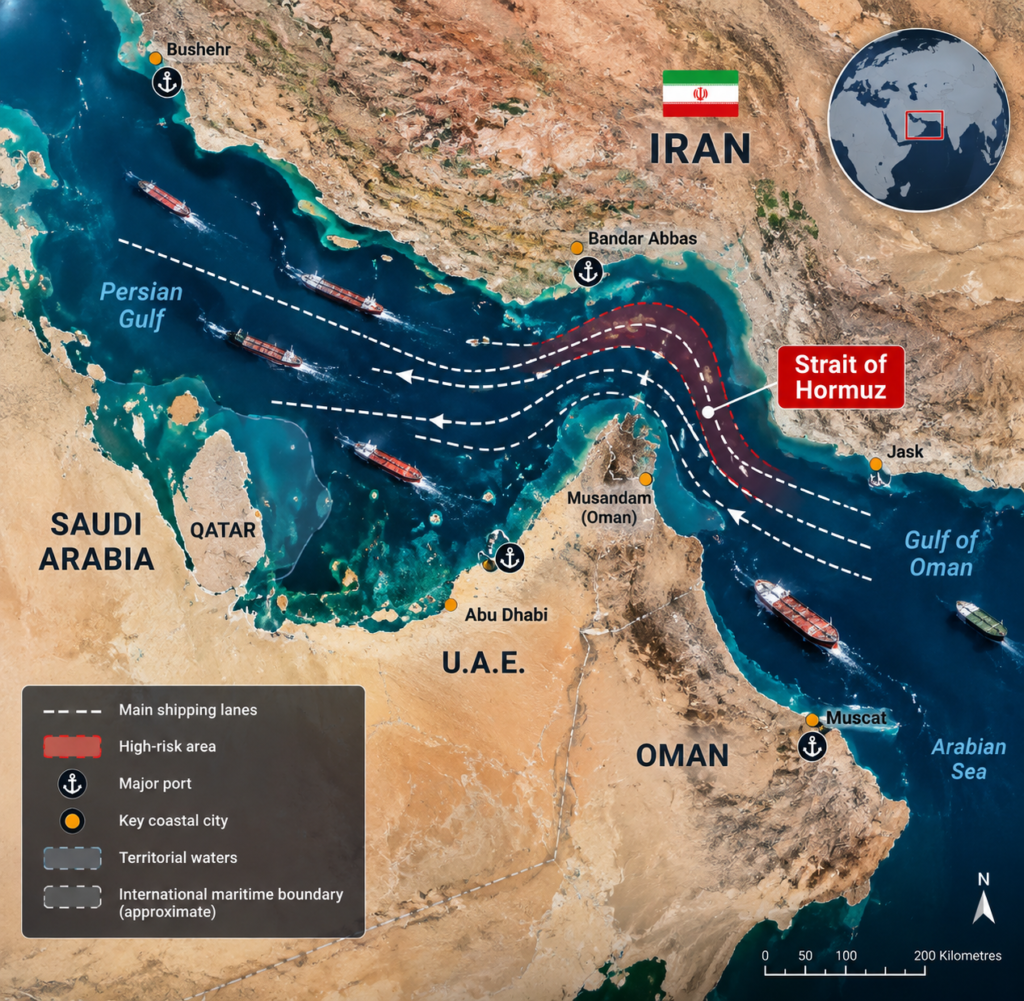
Figure 7. Editorial map illustrating the Strait of Hormuz and surrounding maritime geography relevant to route diversification and risk planning.
This can increase cost during normal conditions but improve resilience during a crisis.
The Human Cost of Maritime Disruption
There is also a human dimension to maritime logistics. Seafarers are working in increasingly dangerous conditions.
The IMO reported in August that thousands of seafarers remained affected by the conflict, with up to 400 ships carrying around 6,000 seafarers having been unable to safely leave the Persian Gulf at that point.
Supply-chain discussions can sometimes focus exclusively on freight rates, containers, fuel, delivery times, and inventory. But behind every vessel is a crew. Humanitarian logistics ultimately exists to protect human life, and the safety of transportation workers is part of that responsibility.
What Humanitarian Organizations Can Do
1. Build alternative transportation routes: Identify alternative ports, airports, border crossings, and road corridors before they are urgently needed.
2. Maintain critical buffer inventory: Essential medicines, food, water-treatment supplies, fuel-related equipment, and emergency shelter materials may require strategic safety stock.
3. Diversify suppliers: Multiple suppliers can provide greater flexibility during disruption.
4. Strengthen logistics intelligence: Track border status, port operations, shipping security, fuel availability, road conditions, airspace restrictions, and local market prices.
5. Use scenario planning: Prepare responses for limited disruption, prolonged maritime disruption, regional escalation, and major closure of a critical transport corridor.
The Role of Technology in Humanitarian Logistics
Technology can help humanitarian organizations manage uncertainty through GPS tracking, supply-chain visibility platforms, warehouse management systems, demand forecasting, AI-supported route analysis, satellite imagery, digital procurement systems, real-time shipment tracking, and risk dashboards.
However, technology is not a substitute for physical logistics infrastructure. An excellent digital system cannot move a truck through a closed border crossing.
Technology is most valuable when combined with reliable data, trained people, alternative infrastructure, and clear decision-making.
Humanitarian Logistics Requires Resilience, Not Just Efficiency
Traditional supply-chain management often focuses on efficiency. Humanitarian logistics must balance efficiency with resilience.
A highly efficient supply chain may have low inventory, few suppliers, one major transport route, and minimal warehouse capacity. A resilient supply chain may deliberately maintain backup suppliers, safety stock, alternative routes, and multiple warehouses.
The second model may cost more under normal conditions. But during a crisis, it can prevent catastrophic shortages.
Businesses can also learn more about logistics outsourcing and the strategic role of external logistics partners when building resilient supply chains.
What the Iran–U.S. War Means for Global Supply Chains
The effects extend beyond humanitarian organizations. Companies involved in procurement, manufacturing, retail, energy, shipping, logistics, agriculture, and pharmaceuticals are also exposed.
A conflict in one geographic area can influence shipping, fuel, transportation, insurance, production costs, food prices, humanitarian budgets, and consumer prices. This interconnectedness is why modern supply-chain professionals increasingly need to understand geopolitics and risk management.
Key Lessons for Supply Chain Professionals
Lesson 1: Do not depend on one route. A single transportation corridor can become a critical vulnerability.
Lesson 2: Low inventory is not always low risk. Inventory reduction can improve efficiency but increase exposure to disruption.
Lesson 3: Transportation risk must be monitored continuously. A supplier can have inventory available while the transportation route is effectively unavailable.
Lesson 4: Fuel is a strategic supply-chain input. Fuel disruption can affect almost every logistics activity.
Lesson 5: Humanitarian logistics needs pre-positioning. Waiting until a crisis begins can make procurement and transportation dramatically more difficult.
Lesson 6: Diversification has a cost—but so does disruption. Alternative suppliers, warehouses, and routes may appear expensive during normal conditions, but during a crisis they can become extremely valuable.
Conclusion
The Iran–U.S. war demonstrates that humanitarian logistics is not simply about moving relief supplies from one location to another. It is about maintaining the flow of essential resources under extreme uncertainty.
The current disruption around the Strait of Hormuz shows how maritime security, fuel markets, freight costs, insurance, ports, airspace, warehouses, and humanitarian operations are closely connected.
Even where physical supplies remain available, logistics can become the limiting factor.
The central lesson for humanitarian organizations and supply-chain professionals is clear: resilient supply chains require alternatives before disruption occurs—not after.
Organizations that diversify suppliers, pre-position critical inventory, develop alternative transport corridors, strengthen logistics intelligence, and prepare multiple response scenarios will be better positioned to continue operations during prolonged crises.
The current conflict is therefore more than a geopolitical event. It is also a real-world demonstration of why humanitarian logistics, supply-chain resilience, and risk management must be treated as strategic capabilities.
Selected References
International Maritime Organization. (2026, August 28). Six months of uncertainty for seafarers in Strait of Hormuz. https://www.imo.org/en/mediacentre/secretarygeneral/pages/statement-on-the-ongoing-crisis-in-the-strait-of-hormuz.aspx
International Maritime Organization. (2026, October 6). Middle East—Highlighted (confirmed) incidents. https://www.imo.org/en/mediacentre/hottopics/pages/middle-east-highlighted-incidents.aspx
International Maritime Organization. (2026). Monthly data on transits of ships through the Strait of Hormuz. https://www.imo.org/en/mediacentre/hottopics/pages/strait-of-hormuz-middle-east-data.aspx
International Rescue Committee. (2026). Closure of the Strait of Hormuz and regional airspace closures are heavily impacting aid supply chains. https://www.rescue.org/uk/press-release/closure-strait-hormuz-and-regional-airspace-closures
Logistics Cluster. (2026, May 25). Supply routes snapshot—Regional Middle East. https://logcluster.org/en/documents/supply-routes-snapshot-regional-middle-east-25-may-2026
Reuters. (2026, October 5). Oil’s new problem isn’t supply. It’s logistics. https://www.reuters.com/commentary/reuters-open-interest/oils-new-problem-isnt-supply-its-logistics-2026-10-05/
Reuters. (2026, October 6). From just-in-time to just-in-case: Oil executives say world needs more export routes. https://www.reuters.com/business/energy/just-in-time-just-in-case-oil-executives-say-world-needs-more-export-routes-2026-10-06/
Reuters. (2026, October 7). Attacks on tankers in Hormuz hit highest of any week since start of Iran war, sources say. https://www.reuters.com/world/middle-east/attacks-tankers-hormuz-hit-highest-any-week-since-start-iran-war-sources-say-2026-10-07/
United Nations Office for the Coordination of Humanitarian Affairs. (2026, October 6). Islamic Republic of Iran: Humanitarian update No. 08. https://reliefweb.int/report/iran-islamic-republic/islamic-republic-iran-humanitarian-update-no-08-31-august-2026
Visual Notes
Figures 1–3 and 5–7 are original editorial/illustrative visuals prepared for this Outreach Hub article. They are intended to explain logistics concepts and are not photographs documenting a specific real-world incident. Figure 4 is a data chart prepared from the International Maritime Organization’s confirmed-incident listing.