Logistics & Supply Chain Management

Humanitarian logistics under conflict
Logistics & Supply Chain Management

Humanitarian Logistics Under Conflict: The Impact of the Iran–U.S. War on Aid and Supply Chains

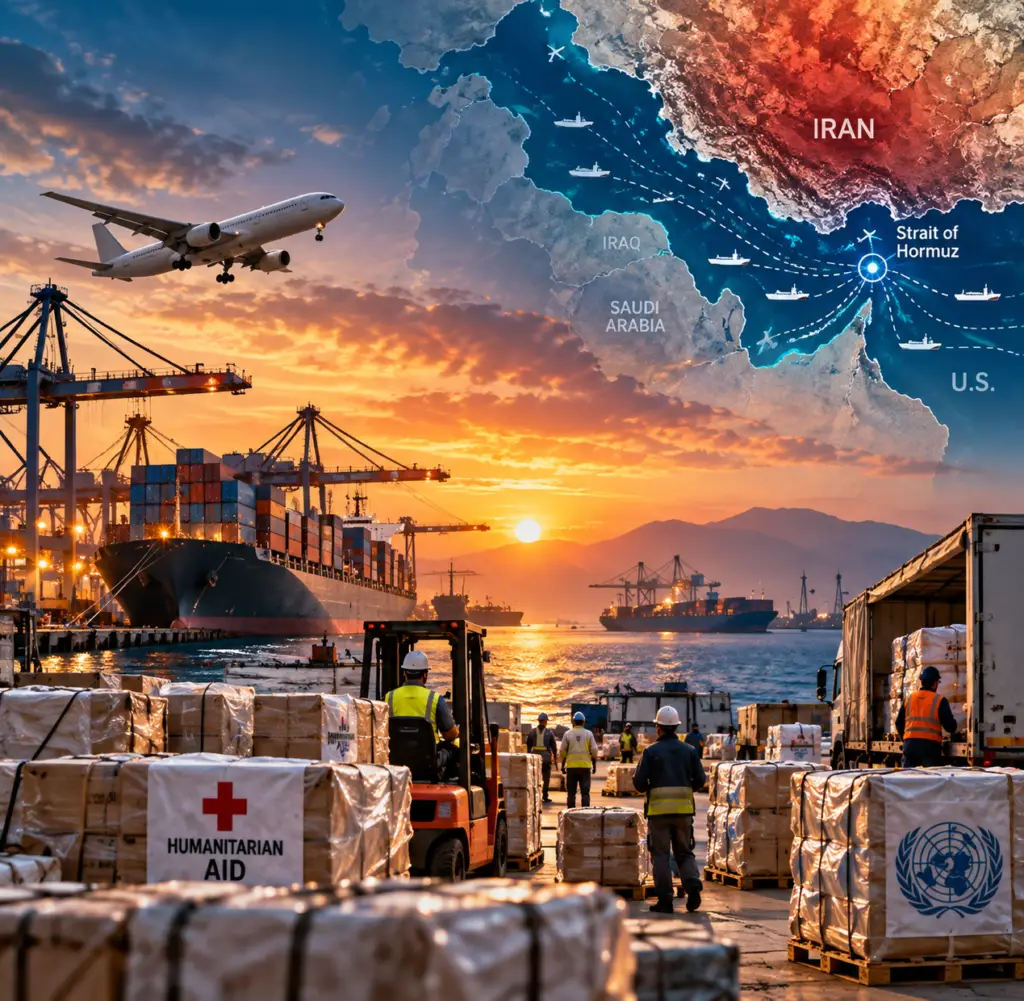
Humanitarian logistics, maritime disruption, and supply-chain resilience Humanitarian logistics becomes especially critical when conflict disrupts the systems used to move food, medicine, fuel, shelter materials, and other essential supplies. The ongoing Iran–U.S. war has created a complex logistics environment across the Middle East, with consequences extending well beyond the immediate conflict zone. The disruption of maritime routes, regional airspace, fuel markets, ports, and transportation corridors is creating additional challenges for humanitarian organizations. The effects are not limited to Iran and neighboring countries. Humanitarian supply chains operating across the Middle East, Africa, and other vulnerable regions can also face higher transportation costs, longer lead times, and reduced access to critical supplies. As of October 2026, the Strait of Hormuz remains one of the most important logistics concerns. The International Maritime Organization has confirmed 93 incidents involving commercial shipping in the Strait of Hormuz and the wider Middle East as of October 6, while recent attacks on tankers have increased maritime security risks. For humanitarian organizations, this raises an important question: How can essential supplies continue moving when the transportation infrastructure itself becomes part of the crisis? Figure 1. Humanitarian logistics under conflict: maritime routes, ports, transport infrastructure, and relief supply chains. What Is Humanitarian Logistics? Humanitarian logistics is the planning, coordination, transportation, storage, and distribution of goods and resources required to support people affected by disasters, conflict, displacement, and other emergencies. Unlike commercial supply chains, humanitarian logistics often operates under extreme uncertainty. The objective is not simply to minimize cost. The objective is to deliver the right supplies to the right place at the right time under difficult and rapidly changing conditions. That makes humanitarian logistics particularly vulnerable when transport corridors, ports, airports, fuel supplies, or border crossings are disrupted. Figure 2. A typical humanitarian supply-chain flow from sourcing and procurement to final distribution to affected communities. How the Iran–U.S. War Is Affecting Humanitarian Supply Chains The conflict has created a combination of direct and indirect logistics disruptions. The UN humanitarian system has reported that the consequences of the regional crisis include disruptions to transportation corridors, airspace, ports, border crossings, and fuel supply chains. These disruptions have affected humanitarian operations across several countries and regions. The International Rescue Committee also reported that the closure of the Strait of Hormuz and regional airspace restrictions were affecting humanitarian supply chains, including cargo flights, staff movements, nutrition supplies, medical supplies, and emergency assistance. 1. Longer transportation routes: When a normal shipping route becomes unsafe, humanitarian organizations may have to reroute cargo. Every additional logistics stage introduces another potential point of failure. 2. Higher transportation costs: Fuel prices, vessel availability, insurance premiums, security requirements, and longer routes can all increase logistics costs. 3. Longer lead times: Ports, airspace, border crossings, fuel availability, security conditions, and carrier decisions can all delay shipments. The Strait of Hormuz: A Critical Logistics Chokepoint Figure 3. Container ports and maritime transport become strategically important when a major shipping corridor is disrupted. The Strait of Hormuz is one of the world’s most strategically important maritime chokepoints. Its importance extends beyond energy markets. When maritime traffic through a major chokepoint becomes disrupted, the consequences can spread across energy, transportation, manufacturing, food, and humanitarian operations. On October 7, Reuters reported that attacks and attempted attacks on tankers in the Strait of Hormuz during the previous week reached their highest level since the war began. Maritime security sources and the Joint Maritime Information Center identified at least 12 incidents involving oil, LNG, and LPG tankers between September 28 and October 5. The IMO’s incident database listed 93 confirmed incidents as of October 6. This does not mean that all maritime trade has stopped. Oil continues to move through and around the region, but the cost, complexity, and risk of moving it have increased substantially. Reuters reported that crude exports through Hormuz had recovered to approximately 14.2 million barrels per day, around 80% of pre-war levels, while freight and insurance costs remained elevated. The problem is increasingly not simply whether the product is available, but whether the product can be transported safely, affordably, and reliably. That is a logistics problem. Figure 4. IMO-confirmed maritime incidents recorded on selected dates from September 28 to October 4, 2026. The underlying IMO page reports 93 confirmed incidents as of October 6, 2026; the chart shows only the dated entries listed for this selected period.Source: https://www.imo.org/en/mediacentre/hottopics/pages/middle-east-highlighted-incidents.aspx Fuel Disruption Creates a Humanitarian Logistics Problem Figure 5. Documentary-style view of medical and humanitarian cargo handling, illustrating the physical operations behind emergency supply chains. Fuel is one of the hidden foundations of humanitarian operations. Humanitarian organizations need fuel to operate trucks, ambulances, generators, refrigeration systems, warehouses, water pumps, communication systems, field offices, and emergency equipment. If fuel becomes expensive or difficult to obtain, the effect can spread throughout the entire humanitarian supply chain. The International Rescue Committee warned that rising fuel and energy prices were increasing operational costs for humanitarian programs following the disruption of regional transport routes. Food Supply Chains Are Also Vulnerable Food is another major concern. Modern humanitarian food supply chains depend on international transportation networks. Food may be purchased from international suppliers, transported to a regional hub, stored in warehouses, moved through ports, transported across borders, delivered to local distribution centers, and finally distributed to affected communities. A disruption at any stage can delay the entire process. Conflict-related energy and transportation disruptions can also affect fertilizer markets, agricultural production, food prices, and transportation costs. Medical Supply Chains Face Even Greater Pressure Medical logistics is particularly sensitive to delays. Some medical products require temperature-controlled transportation, refrigerated storage, specialized packaging, short delivery windows, reliable electricity, and strict inventory controls. Vaccines and certain medicines may require cold-chain management throughout transportation. A disruption in electricity or fuel can therefore become a medical supply-chain problem. A shipment that arrives late may become unusable. Airspace Closures Add Another Layer of Complexity Humanitarian logistics does not depend entirely on ships. Air freight is often used when speed is more important than transportation cost. Medical

ai powered global supply chain alibaba banner size
Logistics & Supply Chain Management

Challenges of AI Adoption in Global Supply Chain Management

Practical insights for procurement, logistics, and supply chain professionals Introduction: AI adoption in supply chain management is becoming increasingly relevant to businesses worldwide. Businesses are exploring AI for demand forecasting, supplier evaluation, logistics planning, disruption monitoring, and decision support. The potential is significant, but adopting AI is not simply a matter of purchasing software and switching it on. Research on AI and supply chain management shows that successful adoption depends on a combination of technology, data, people, processes, governance, and relationships with supply chain partners. Poor data can weaken AI outputs. Legacy systems can make integration difficult. Employees may not trust or understand AI-generated recommendations. Regulatory and cybersecurity requirements can add further complexity. For smaller businesses and firms in emerging economies, limited skills, infrastructure, and investment capacity can make these challenges even more important. This article examines the major challenges businesses should consider before adopting AI in global supply chain management and offers practical steps for managing those challenges. Why AI Is Attractive to Supply Chains Supply chains generate large amounts of information across purchasing, inventory, production, transportation, suppliers, customers, and markets. AI can help organizations process this information and identify patterns that may be difficult to detect manually. Common application areas include demand forecasting, supplier evaluation, logistics and routing, risk monitoring, and disruption management. Research has also examined digital supply chain twins and other data-driven approaches that can support planning and resilience. However, the existence of an AI application does not automatically create business value. Research on analytics and AI repeatedly points to the importance of complementary capabilities, including reliable data, organizational readiness, human skills, and process redesign. In other words, the question is not only whether AI can perform a task, but whether the organization is ready to use its output effectively. AI adoption in supply chain management can help businesses turn large volumes of operational data into more informed planning and decision-making. 1. Poor Data Quality and Integration AI depends heavily on data, yet supply chain data is often fragmented across different companies, software systems, spreadsheets, and formats. Information may be incomplete, outdated, inconsistent, or difficult to combine. Global supply chains make the problem harder because suppliers and logistics partners may use different standards, languages, reporting practices, and information systems. If the underlying data is unreliable, an advanced model can still produce unreliable results. For procurement teams, this can affect supplier scoring, spend analysis, forecasting, and risk monitoring. Before investing heavily in AI, businesses should assess whether their supplier, purchasing, inventory, and logistics data is sufficiently accurate and standardized. Legacy Systems and Infrastructure Many organizations still depend on enterprise systems that were not designed with modern AI applications in mind. Connecting new AI tools to established ERP, procurement, warehouse, transportation, or supplier systems can therefore require additional technical work. Infrastructure readiness is particularly important for smaller firms. A company may purchase an attractive AI solution but discover that its existing systems cannot provide the required data in a usable format. A practical approach is to start with one clearly defined use case and assess integration requirements before expanding. A successful pilot can reveal technical limitations without forcing the organization into a large technology investment. 3. Skills and Organizational Capability AI adoption requires more than technical specialists. Supply chain professionals also need enough understanding to interpret AI outputs and apply them to real purchasing, planning, logistics, and risk decisions. The required capability can include data skills, supply chain knowledge, procurement expertise, and managerial judgment. Organizations that lack this combination may purchase AI tools but fail to capture their full value. Businesses should therefore invest in people alongside technology. Training procurement and logistics teams to understand the strengths, limitations, and appropriate use of AI can be as important as selecting the software itself. 4. Change Management and Human-AI Collaboration AI can change how planners, buyers, analysts, and logistics professionals perform their jobs. Employees may worry about automation, unclear responsibilities, or decisions being made by systems they do not understand. Research distinguishes between automation, where technology performs tasks previously handled by people, and augmentation, where technology supports human judgment. In many supply chain situations, the second approach may be particularly useful. Organizations should clearly define which decisions AI can support, which decisions require human approval, and who remains accountable for the final outcome. This clarity can reduce resistance and improve responsible adoption. 5. Explainability, Transparency, and Trust Supply chain decisions can have significant financial and operational consequences. A procurement manager may therefore hesitate to accept a supplier recommendation if the system cannot explain why one supplier received a higher score than another. Explainability becomes particularly important when AI is used for supplier selection, risk assessment, forecasting, or other decisions that need to be reviewed or challenged. Businesses should ask whether important AI outputs can be understood, documented, and audited. Where decisions are high-stakes, organizations should consider whether a more interpretable model is appropriate rather than relying entirely on a complex black-box system. 6. Algorithmic Bias and Ethical Concerns AI systems can reproduce or amplify patterns contained in historical data. If historical supplier information reflects existing preferences or disadvantages, an automated system may unintentionally carry those patterns into future decisions. For global sourcing, this matters because supplier databases can contain differences in geography, company size, historical performance, and other characteristics. Smaller or newer suppliers could potentially be overlooked if the system is designed without appropriate controls. Organizations should monitor AI outputs, test for unintended patterns, and establish clear responsibility for reviewing important decisions. Responsible AI should be treated as part of supply chain governance rather than as a separate technical issue. 7. Regulatory Fragmentation and Cross-Border Data Governance Global supply chains operate across multiple legal and regulatory environments. Rules relating to personal data, AI systems, cybersecurity, and commercial information may differ between jurisdictions. The European Union’s GDPR and AI Act are examples of regulatory frameworks that can affect organizations operating in or dealing with European markets. Voluntary frameworks such as the NIST AI Risk Management Framework also provide guidance for

Alibaba vs Global Sources vs Trade Shows
Logistics & Supply Chain Management

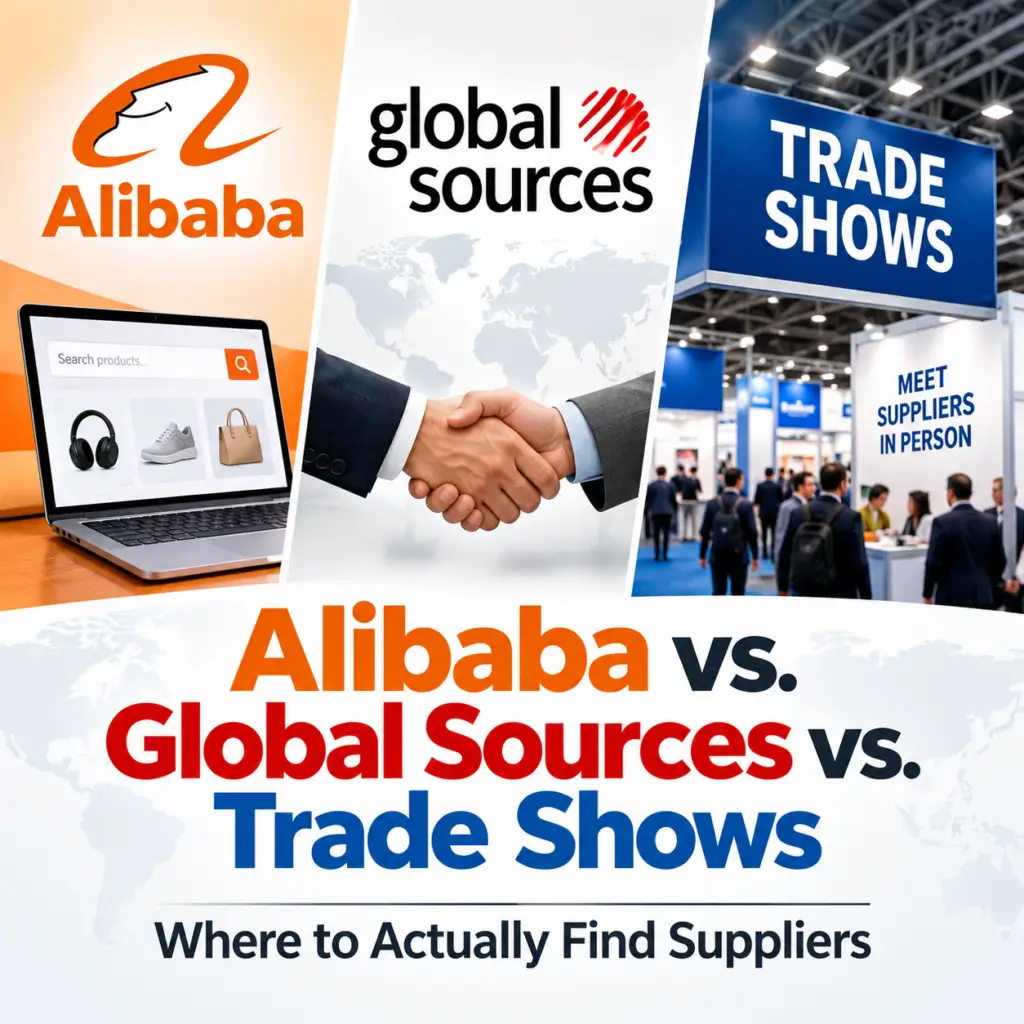
Alibaba vs. Global Sources vs. Trade Shows: Where to Actually Find Suppliers

Alibaba vs Global Sources vs Trade Shows are three practical ways to find overseas suppliers. Each sourcing channel can affect your product quality, pricing, lead time, compliance, communication, and ultimately your customer’s experience. Many first-time importers automatically start with Alibaba because it is one of the best-known B2B sourcing platforms. But Alibaba is only one option. Depending on your product, order size, sourcing experience, and requirements, you may also consider platforms such as Global Sources or meet suppliers directly at international trade shows. Each sourcing channel has different strengths and limitations. The goal is not simply to find the largest number of suppliers. It is to find suppliers that are relevant to your requirements and then properly evaluate them before placing an order. Alibaba and Similar B2B Marketplaces Alibaba and other B2B marketplaces provide a convenient way to discover suppliers from different countries and product categories. They can be particularly useful for buyers who are starting a new product search and want to compare multiple suppliers without immediately traveling overseas. What Alibaba Is Good For Alibaba can be useful when you want to: For a buyer who is testing a new product category, an online marketplace can provide a relatively fast way to build an initial supplier shortlist. Advantages One major advantage is the large number of suppliers and product listings available. Buyers can often compare: Some marketplace transactions may also provide additional payment or transaction-protection mechanisms, depending on the platform and the specific order. Limitations The large number of suppliers can also create a challenge. Not every supplier is necessarily the right manufacturer for your product. Some businesses may operate as trading companies, sourcing agents, or distributors rather than manufacturing every product shown in their catalogs. Product quality can also vary significantly between suppliers. For this reason, marketplace information should be treated as the starting point for supplier research, not as a substitute for due diligence. When to Use Alibaba Alibaba can be particularly useful when: The important step is what you do after finding the suppliers. Before placing an order, buyers should also know how to vet an overseas supplier and identify potential risks. Global Sources Global Sources is another established sourcing platform that connects buyers with suppliers and also operates sourcing events and trade shows. The platform can be useful for buyers who want to research suppliers online while also having access to offline sourcing opportunities. What Global Sources Is Good For Global Sources can be useful for: The platform also provides supplier information and verification-related services, although buyers should still perform their own due diligence. Advantages One potential advantage is the combination of online sourcing and physical trade-show opportunities. A buyer can research suppliers online and later meet selected suppliers in person at a relevant sourcing event. Global Sources also provides information about supplier verification and manufacturer status for relevant suppliers. However, buyers should understand exactly what a verification or supplier assessment covers rather than assuming that any verification badge guarantees product quality or transaction performance. Limitations Global Sources may provide a different supplier pool and browsing experience from Alibaba, and the number of suppliers available for a particular product may be smaller. It is also important to remember that a supplier being listed on a B2B platform does not eliminate the need for independent verification. Buyers should still check: When to Use Global Sources It may be useful when: Trade Shows and Sourcing Events Trade shows provide a completely different sourcing experience. Instead of evaluating suppliers primarily through websites, product listings, messages, and photographs, buyers can meet suppliers face to face and examine products physically. Examples include large international trade fairs such as the Canton Fair, Global Sources exhibitions, and industry-specific trade shows. What Trade Shows Can Offer At a trade show, buyers may be able to: This can be particularly valuable when product quality, customization, or technical specifications are difficult to evaluate online. Advantages One of the biggest advantages is direct interaction. A buyer can ask questions immediately instead of exchanging dozens of messages over several days or weeks. Physical samples can also reveal details that may not be obvious in product photographs. Trade shows can also make it easier to compare several suppliers within a relatively short period. Limitations Trade shows require time and money. Costs may include: Trade shows also do not eliminate the need for supplier due diligence. A professional-looking booth and attractive product samples do not automatically guarantee that the supplier will deliver consistently after the order is placed. When Trade Shows Make Sense Trade shows can be particularly useful when: Alibaba vs. Global Sources vs. Trade Shows When comparing Alibaba vs Global Sources vs Trade Shows, the right sourcing channel depends on your product, budget, order volume, and supplier requirements. There is no single sourcing channel that works for every business. Factor Alibaba Global Sources Trade Shows Supplier discovery Very convenient Convenient Direct Initial cost Low Low Higher Supplier comparison Easy online Easy online Easy in person Physical samples Usually requested separately Available online or at events Can be examined directly Face-to-face interaction Usually limited Available through events Strong Travel required No Usually no for online sourcing Usually yes Small-order research Useful Useful Less convenient Large/complex sourcing Useful for initial research Useful Particularly useful Supplier due diligence Still required Still required Still required Relationship building Mainly online Online + events Direct interaction The table should not be interpreted as a ranking. Each channel serves a different purpose. A Simple Way to Choose the Right Channel Your sourcing strategy should reflect the stage of your business. Alibaba vs Global Sources vs Trade Shows can each work well, depending on your product, order volume, budget, and sourcing goals. Testing a New Product If you are testing a product with a small initial order, an online B2B marketplace can be a practical starting point. You can compare several suppliers, request samples, and learn more about pricing before committing to a larger purchase. Looking for Export-Oriented Suppliers If export experience is particularly

how to vet an overseas supplier
Logistics & Supply Chain Management

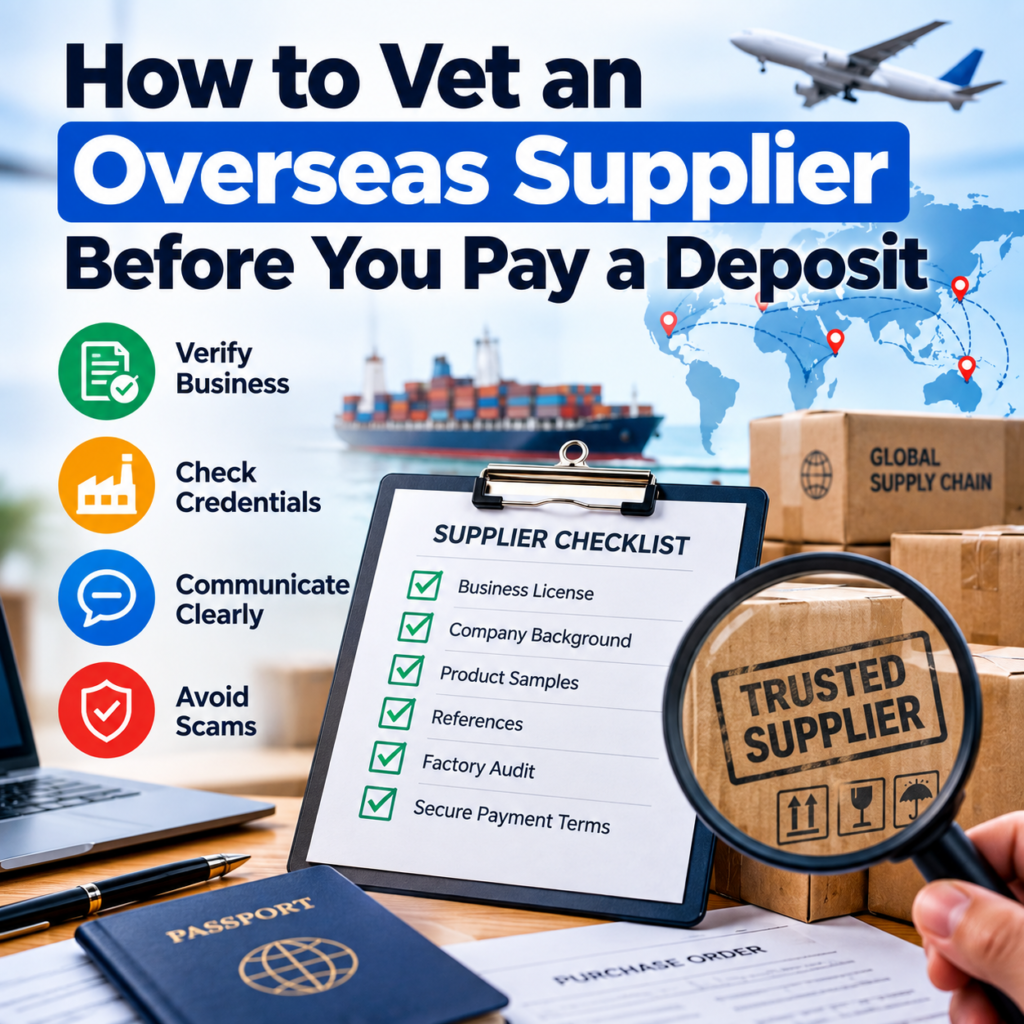
How to Vet an Overseas Supplier Before You Pay a Deposit

Knowing how to vet an overseas supplier is essential before you pay a deposit or place a large order. A supplier can look perfect on paper — polished website, fast replies, low prices — and still turn out to be unreliable, undercapitalized, or outright fraudulent. Once a deposit has left your account, leverage drops sharply. Below is a practical supplier due-diligence process buyers can use before committing money to a new overseas supplier.Knowing how to vet an overseas supplier helps buyers follow a consistent process instead of relying on assumptions or a supplier’s sales pitch. 1. Verify the Company’s Legal Identity Before discussing prices or placing an order, make sure you know exactly who you are dealing with. A supplier’s website or marketplace profile does not necessarily prove that the company is a legitimate manufacturer or trading business. What to Check If the supplier refuses to provide basic company information or becomes defensive about reasonable verification questions, treat that as a warning sign. 2. Check Trading History and Reputation A supplier may have an attractive product catalog, but what matters is whether the business has a credible history of supplying customers. Search Beyond the Supplier’s Own Website Look for: Search the company name together with terms such as “complaint,” “review,” “scam,” “dispute,” or “customer experience.” Do not automatically believe either positive or negative online reviews. Look for patterns across multiple sources and consider how recent the information is. Ask for Customer References For a larger order, you can ask the supplier whether they can provide references from existing customers. If references are provided, contact them directly rather than relying only on testimonials published on the supplier’s website.Buyers can also review official international trade resources when researching suppliers and overseas markets. 3. Confirm Production Capability, Not Just Sales Capability A supplier may have an impressive catalog without manufacturing all of the products shown. Some businesses are genuine trading companies or sourcing agents rather than manufacturers. That is not necessarily a problem, but you should understand who will actually produce and ship your goods. Ask Direct Questions Ask the supplier: For larger or higher-risk orders, consider an independent factory audit or inspection before finalizing the shipment. A supplier’s ability to communicate clearly about production capacity is often more useful than simply looking at the size of its product catalog. 4. Request Samples and Test Them Never assume that the quality of a product shown in photographs will match the actual product. Before placing a significant order, request samples whenever practical. What to Evaluate When the sample arrives, check: If the product is intended for a specific market, make sure the sample meets that market’s requirements before committing to a larger order. For important or regulated products, independent testing or inspection may also be appropriate. 5. Review Payment Terms Carefully Payment is one of the highest-risk stages of an international sourcing transaction. Be particularly cautious if a new supplier demands 100% payment upfront without a clear commercial reason or meaningful transaction protection. Check the Payment Details Before sending money: A common structure for new relationships is a partial deposit before production and the remaining balance before shipment, but the appropriate arrangement depends on the product, supplier, order size, and transaction protections available. Never rely solely on informal chat messages for important commercial terms. 6. Confirm Communication and Accountability Communication problems often become more serious after payment has been made. Before placing the order, pay attention to how professionally the supplier handles questions, documentation, samples, and changes. Look for Consistency Check whether: Be cautious if the supplier creates unnecessary urgency, repeatedly changes payment instructions, or pressures you to send money immediately. 7. Check Product Certifications and Compliance Product compliance can become a major issue after the order has already been produced. The requirements depend on the product and destination market. Before ordering, determine whether your product requires certifications, testing reports, labeling requirements, safety documentation, or other compliance documents. Ask the Supplier for Relevant Documents Depending on the product, these may include: Do not assume that a certificate is genuine simply because the supplier sends a PDF. For important products, verify the document with the issuing organization or testing laboratory where possible. 8. Ask About Previous Export Experience A supplier may be perfectly capable of producing a product but have limited experience exporting it to your target market. Ask: Previous export experience does not guarantee a successful transaction, but it can help you understand whether the supplier is familiar with the practical requirements of international trade. 9. Put Important Terms in Writing Once you have decided to proceed, make sure the important commercial terms are documented. The purchase order or contract should clearly identify matters such as: Written terms give both parties a clear reference point if something goes wrong. 10. Watch for Common Red Flags No single warning sign automatically proves that a supplier is fraudulent. However, several warning signs appearing together deserve additional investigation. Common Red Flags When several of these signs appear together, slow the transaction down and perform additional verification before sending money. 11. A Simple Supplier Due-Diligence Checklist Before paying a deposit, work through this checklist: If several important items remain unresolved, consider postponing the deposit until they are clarified. 12. A Practical Supplier-Vetting Workflow A simple process can reduce the risk of making an expensive mistake. Step 1: Build a Shortlist Find several potential suppliers rather than immediately choosing the first company that responds. Step 2: Compare the Companies Compare their: Step 3: Request Documentation Ask shortlisted suppliers for the company information and product documents relevant to your order. Step 4: Order Samples Evaluate the actual product instead of relying entirely on photographs or descriptions. Step 5: Negotiate Commercial Terms Agree on price, quantity, specifications, payment, production, inspection, and shipping arrangements. Step 6: Verify Before Payment Perform a final check of the supplier’s legal identity, bank details, documents, and contractual terms. Step 7: Inspect Before Final Payment For larger orders, consider an independent pre-shipment inspection before releasing the

International Procurement 101: A Practical Guide to Global Sourcing
Logistics & Supply Chain Management

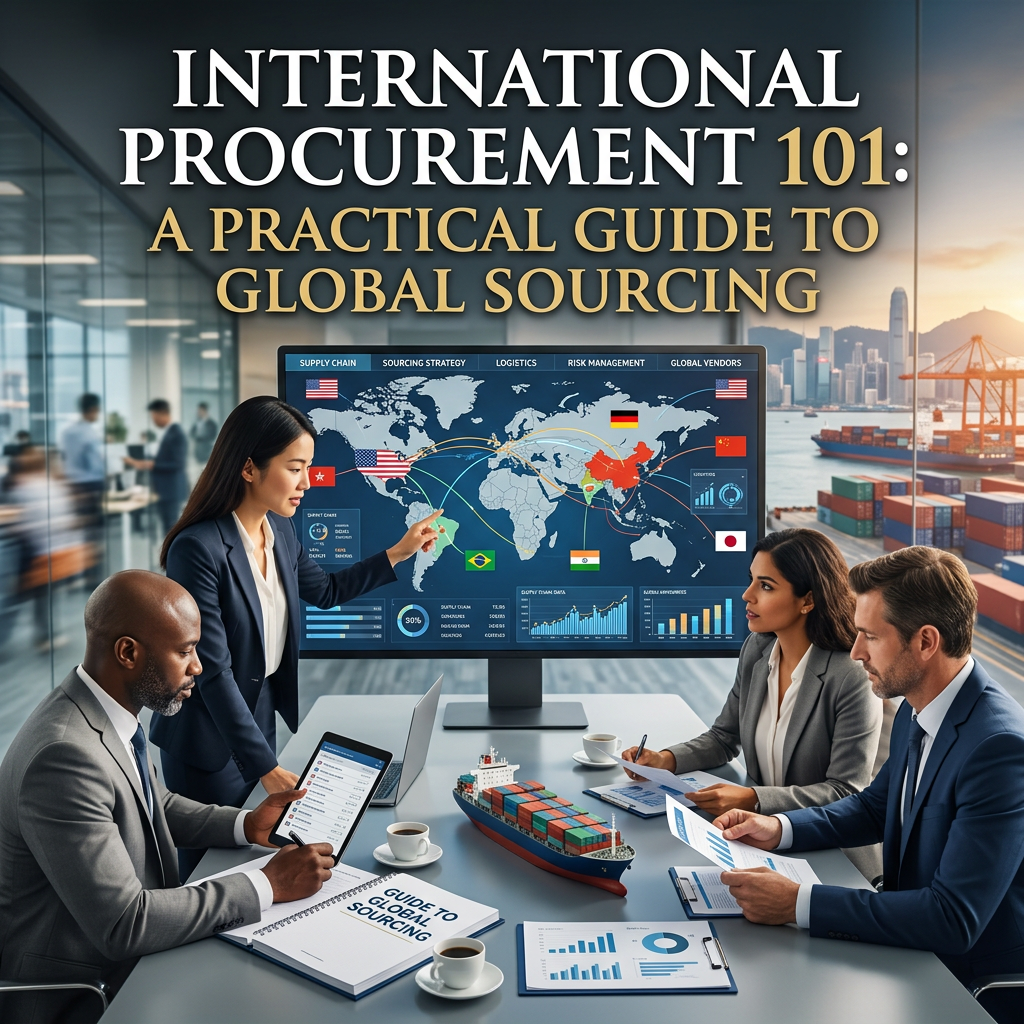
International Procurement 101: A Practical Guide to Global Sourcing

International procurement has become an essential part of modern business. Companies of all sizes increasingly source products, raw materials, components, equipment, and services from suppliers located in different countries. Global sourcing can provide access to competitive prices, specialized manufacturers, better-quality materials, and new markets. However, purchasing internationally also introduces additional challenges, including shipping, customs, currency fluctuations, supplier reliability, quality control, payment risks, and international trade regulations. This guide explains the fundamentals of international procurement and provides a practical framework for businesses and procurement professionals looking to source successfully from overseas suppliers. What Is International Procurement? International procurement is the process of sourcing and purchasing goods or services from suppliers located outside the buyer’s home country. Unlike domestic procurement, international procurement involves additional considerations such as cross-border transportation, customs clearance, import duties, international payment methods, foreign exchange rates, trade regulations, and different business practices. A typical international procurement transaction may involve a buyer in one country, a manufacturer in another, a freight forwarder handling transportation, customs authorities, banks processing payments, and inspection companies verifying product quality. The objective remains the same as in any procurement process: obtaining the right product or service, at the right quality, price, quantity, and time. The difference is that international transactions require greater planning and risk management. International Procurement vs. Domestic Procurement The basic principles of procurement are similar whether a company buys locally or internationally. However, international procurement introduces several additional layers of complexity. For this reason, international procurement requires a more comprehensive approach to supplier selection and risk management. Factor Domestic Procurement International Procurement Supplier location Same country Different country Transportation Usually simpler May involve international freight Customs Generally not required Usually required Currency Usually the same May involve foreign currencies Lead time Often shorter Can be significantly longer Regulations Domestic regulations Multiple countries’ regulations Supplier verification Relatively easier May require additional due diligence Payment risk Generally lower Potentially higher Communication Usually easier Time zones and language differences may apply The International Procurement Process A successful global sourcing program should follow a structured procurement process. While the exact process varies by company and industry, the following steps provide a useful framework. 1. Define the Requirement The first step is to clearly define what the organization needs to purchase. This should include specifications such as: Product description Technical specifications Required quantity Quality standards Packaging requirements Delivery location Required delivery date Applicable certifications Target budget or cost expectations Poorly defined requirements can lead to inaccurate quotations, unsuitable products, quality problems, and disputes with suppliers. 2. Identify Potential Suppliers Once the requirement is clear, procurement teams can begin identifying potential suppliers. Common sources include: – Manufacturer websites – International B2B marketplaces – Trade directories – Industry exhibitions – Trade associations – Supplier referrals – Professional networks – Sourcing agents At this stage, it is generally better to identify several potential suppliers rather than immediately selecting the first company that offers an attractive price. 3. Request Quotations Procurement teams typically send a Request for Quotation (RFQ) to shortlisted suppliers. A good RFQ should provide enough information for suppliers to prepare comparable offers. It should clearly specify the required products, quantities, technical requirements, delivery location, expected delivery schedule, packaging requirements, payment expectations, and any relevant compliance requirements. Receiving multiple quotations allows the buyer to compare suppliers on more than just price. 4. Evaluate Suppliers Supplier evaluation is one of the most important stages of international procurement. Procurement professionals should consider factors such as: – Product quality – Manufacturing capability – Production capacity – Pricing – Lead time – Certifications – Previous export experience – Financial stability – Communication – Quality-control procedures – References and reputation The cheapest supplier is not necessarily the best supplier. Before placing an international order, buyers should know how to vet an overseas supplier and identify potential risks. A supplier offering a lower unit price may ultimately become more expensive if it delivers poor-quality products, misses deadlines, or creates additional logistics and inspection costs. 5. Negotiate Commercial Terms After evaluating supplier offers, the buyer may negotiate commercial terms. Negotiation can cover: – Unit price – Minimum order quantity – Payment terms – Delivery schedule – Packaging – Warranty – Quality standards – Inspection procedures – Shipping terms – After-sales support Strong procurement negotiation focuses on the total value of the transaction rather than simply trying to obtain the lowest possible price. 6. Issue the Purchase Order Once the buyer and supplier agree on the commercial terms, the buyer can issue a Purchase Order (PO). The purchase order should clearly document the agreed requirements, including product specifications, quantities, prices, delivery terms, payment terms, and other important conditions. A detailed PO reduces the risk of misunderstandings later in the transaction. 7. Arrange Production and Quality Control For manufactured goods, the buyer may need to monitor production progress and conduct quality inspections before shipment. Depending on the product and level of risk, inspection may take place: – Before production – During production – Before shipment – After delivery Quality control is particularly important when the buyer is purchasing large quantities or working with a supplier for the first time. 8. Manage International Shipping After the goods are ready, transportation must be arranged. International shipments may involve: – Supplier – Freight forwarder – Shipping line or airline – Customs broker – Importer – Customs authorities – Local transportation provider The selected transportation method depends on factors such as cost, urgency, shipment size, product characteristics, and destination. 9. Customs Clearance and Import International shipments must comply with the import regulations of the destination country. Depending on the product and country, the importer may need to manage: Customs documentationCommercial InvoicesPacking ListsCertificates of OriginImport PermitsProduct CertificationsCustom DutiesTaxesRegulatory Requirements Procurement teams should understand these requirements before placing an order rather than discovering them after the goods have already been shipped. For additional guidance on international trade and exporting, buyers can consult official resources from the U.S. International Trade Administration. 10. Receive and Evaluate the Goods After delivery, the buyer should verify that

logistics outsourcing
Logistics & Supply Chain Management

Logistics Outsourcing: Should Your Business Hand Off Its Supply Chain?

Every growing business eventually faces the same question: should logistics remain in-house, or should some or all logistics activities be handled by an external provider? There is no universal answer. The right approach depends on the company’s size, order volume, geographic reach, cost structure, operational capabilities, and how much control the business needs over its supply chain. For some businesses, outsourcing logistics can provide flexibility, specialized expertise, and access to infrastructure without large investments. For others, keeping critical logistics activities in-house may provide greater control over quality, speed, and customer experience. The key is to understand what should be outsourced, what should remain internal, and how to manage the transition. For a broader understanding of international procurement and global sourcing, see our guide to International Procurement 101. What Logistics Outsourcing Actually Means Logistics outsourcing means contracting an external company to perform one or more logistics activities that could otherwise be managed internally. A common example is a third-party logistics provider (3PL). A 3PL may provide services such as: Warehousing Inventory handling Transportation Freight forwarding Order fulfillment Customs support Packaging and labeling Returns management A business does not necessarily have to outsource its entire supply chain. It can outsource one specific function while continuing to manage other activities internally. For example, an e-commerce company might manage purchasing and customer service itself while using a 3PL for warehousing, picking, packing, and shipping. What Functions Can Be Outsourced? The appropriate scope of outsourcing varies from business to business. Warehousing A company can use an external warehouse instead of operating its own facility. This can reduce the need to invest in warehouse space, equipment, utilities, security, and warehouse personnel. Transportation Transportation can be outsourced to carriers, freight companies, or logistics providers that manage domestic or international deliveries. Freight Forwarding International businesses may use freight forwarders to arrange ocean freight, air freight, documentation, and coordination with other parties involved in international transportation. Order Fulfillment E-commerce businesses can outsource the physical process of receiving orders, picking products, packing shipments, and handing them to carriers. Customs and Import Support International shipments often involve customs documentation and regulatory requirements. Specialized logistics providers may assist with these processes. Returns Management Some businesses also outsource product returns, inspection, restocking, and related logistics activities. The important point is that logistics outsourcing does not have to be an all-or-nothing decision. When Outsourcing Makes Sense There are several situations in which outsourcing logistics may be worth considering. You’re Growing Faster Than Your Infrastructure A business may experience rapid growth before it has enough warehouse space, employees, vehicles, or logistics systems to support the additional volume. Building new infrastructure internally can take time and require significant investment. A logistics provider may allow the business to increase capacity without immediately building its own network. Your Business Is Expanding Into New Markets International expansion can introduce unfamiliar transportation routes, customs procedures, documentation requirements, and local delivery networks. A logistics provider with established operations in the target market may already have the infrastructure and experience required to support that expansion. Logistics Is Not a Core Competency For some companies, the main competitive advantage comes from product development, manufacturing, technology, sales, or customer relationships rather than logistics. In such cases, outsourcing certain logistics activities can allow management to concentrate internal resources on activities that are more closely connected to the company’s core business. Demand Is Seasonal or Unpredictable Businesses with large seasonal fluctuations may not want to maintain enough permanent infrastructure and staff to handle their peak volume throughout the entire year. An external provider may offer additional capacity during busy periods. When It’s Better to Keep Logistics In-House Outsourcing is not automatically the right solution. There are situations where maintaining internal control may make more sense. You Have Strict Quality-Control Requirements Businesses dealing with fragile, perishable, high-value, or highly specialized products may require close operational oversight. If product handling directly affects quality or customer satisfaction, the company may prefer to keep important logistics activities under direct control. Your Volumes Are Stable and Predictable If a company has consistent shipment volumes and already operates an efficient warehouse or transportation system, outsourcing may not necessarily reduce costs. The business should compare the total cost of its existing operation with the complete cost of an external provider before making a decision. Logistics Is Part of Your Competitive Advantage For some businesses, logistics is more than a support function. Fast delivery, specialized packaging, highly responsive fulfillment, or a unique distribution model may be an important part of the customer experience. In such cases, handing the operation to an external provider could affect a capability that differentiates the business from competitors. Benefits of Logistics Outsourcing When properly planned, outsourcing can provide several potential benefits. Lower Infrastructure Investment The business may avoid some of the capital investment associated with warehouses, vehicles, equipment, technology, and other logistics infrastructure. Access to Specialized Expertise Established logistics providers may have experience in areas such as freight management, customs, warehousing, transportation, and fulfillment. This can be particularly useful for businesses that do not have extensive internal logistics expertise. Greater Scalability An external provider may be able to handle increasing or decreasing volumes more flexibly than a small internal logistics operation. Access to Technology Some logistics providers offer warehouse management systems, shipment tracking, inventory visibility, reporting, and other technology capabilities. Building comparable systems internally can require additional investment and expertise. Geographic Reach A logistics provider with multiple warehouses or transportation networks may help a business serve customers in locations where establishing its own infrastructure would be difficult or expensive. Potential Challenges and Risks Outsourcing also creates risks that should be considered before signing a contract. Less Direct Control When a third party handles logistics activities, the business has less direct control over day-to-day operations. Problems such as delayed shipments, inventory errors, damaged products, or poor communication can affect the customer even though the business did not physically perform the logistics activity. Service Quality The quality of service depends partly on the provider’s processes, staff, technology, and management. A

Scroll to Top